 |
 |
 |
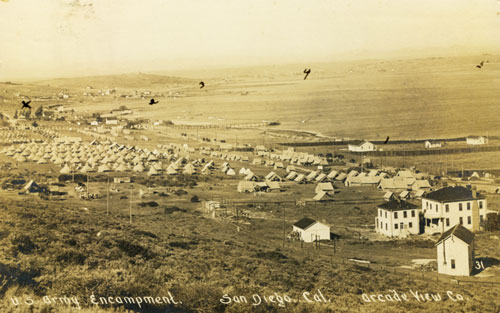
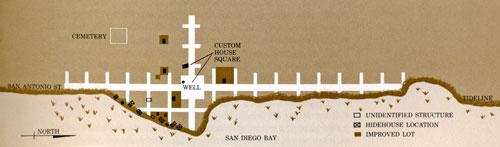
New Project to Reconfigure Tank FarmThreatens the last remains of Historic La Playa on Point Loma By Bruce Coons La Playa and particularly the Area of Potential Affects (APE) around the building known as Quarters "A" represent what is potentially one of the most important archeological sites on the West Coast of the United States. There was a broad mix of cultures here: Mexicans, Alaskans, Sandwich Islanders, Native Americans, Chinese, Americans, and others from around the Pacific Rim. I know of no other place where this type of diverse population living together occurred so early in the history of California. This is the second oldest town site in San Diego. The adobe Mexican Customs House, the town well, several other improved lots, and the plaza are all within the APE. San Diego, the "Plymouth Rock" of the West Coast, is where modern California began in 1769. Settlers arriving by ship first set foot on ground not far from Quarters "A" and the site has remained active since that time.
Quarters A and the site of old La Playa We are making the following recommendations to the US Navy in order of preference to protect this resource and recover it's unique history.
Quarters "A" should be preserved if at all possible. Based on our inspection, the building was built in the 1890s. This conclusion is supported by the architecture, the methods of construction and materials used. The current construction date of post 1900 that the Navy is using is incorrect. More research needs to be completed before any action is taken. Additional research is also needed in determining the builder, its original use, and if it was present before the base was created. Additionally, an evaluation of the mature landscaping surrounding Quarters"A" needs to be completed and the landscaping preserved to the extent possible.
From The Silver Dons, by Richard F. Pourade, 1963 We cannot emphasize enough how important this site is. This site was Southern California's first and, for a long period of time, only connection with the world at large. It is also a site that has not received the attention it is due. The information this site can yield is the only chance we will ever have to add to our knowledge of this period and answer these questions; once disturbed the chance to recover this history will be lost forever. SOHO is also requesting that it continue to be consulted throughout this Section 106 process, including development of the research design, data recovery and disposition. We would also request that SOHO be a signer to the resulting Memorandum of Agreement. The Navy is the steward of one of the most important sites of early civilization on the West Coast of the U. S. and we expect that they will treat this site accordingly. |
2006 - Volume 37, Issue 3MORE FROM THIS ISSUE New Project to Reconfigure Tank Farm Statement of Financial Position In Memoriam: Lee Roper (1929-2006) Squire Ensworth's Letters to Mr. Whaley Volunteer Profile: Pat Petersen DOWNLOAD full magazine as pdf (8.9mb) |
 |
 |
 |
Mailing - PO Box 80788 · San Diego CA 92138 | Offices - 3525 Seventh Avenue · San Diego CA 92103
|